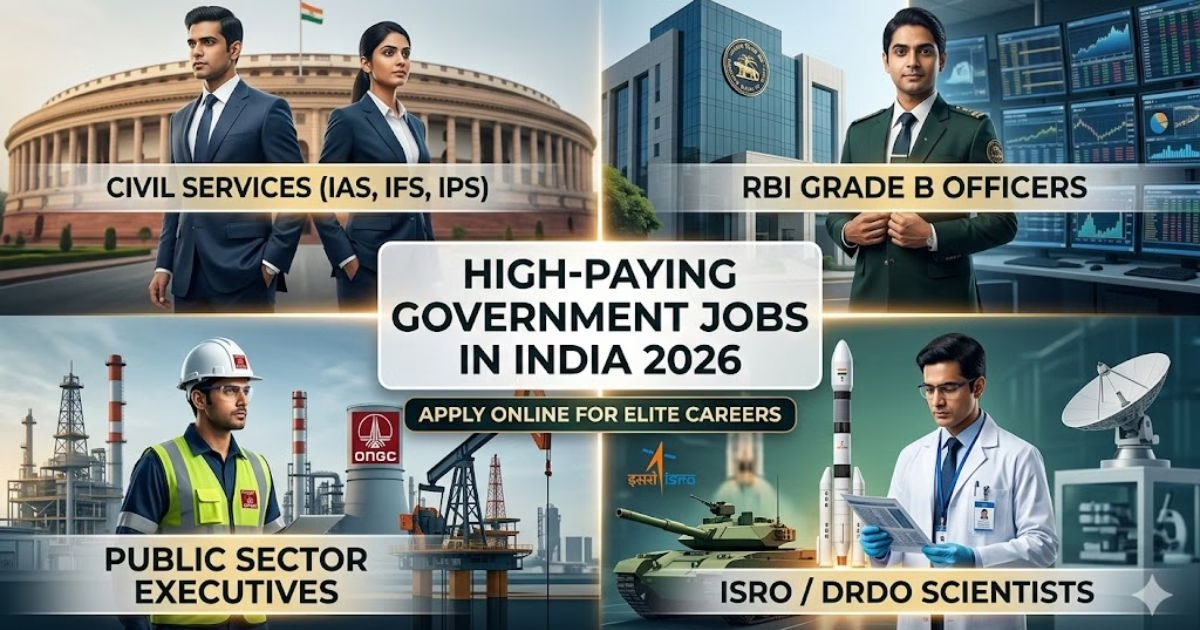
High-Paying Government Jobs In India 2026: Apply Online For Top Elite Careers
When planning a long-term career strategy, the old debate between the private and public sectors always comes up. Many people assume that private companies automatically offer higher salaries, but that is no longer the case. A select group of premier administrative and technical government services now provides starting pay scales, allowances, and bonuses that rival or exceed corporate packages. If you want high financial compensation along with the lifelong stability of a central government role, these top executive positions are worth considering.
Top 5 High-Value Central Government Streams to Target This Year
High-Paying Government Jobs In India 2026: Important Dates
Because these elite administrative openings operate under highly structured annual recruitment calendars, tracking their timelines is essential for early preparation.
| Event / Notification Type | Expected Release Cycle | Application Window Status |
| UPSC Civil Services Examination | First Quarter Annually | Varies by Annual Calendar |
| RBI Grade B Officer Notification | Mid-Year Cycle | Active Annually |
| PSU Executive Trainee (via GATE/Direct) | Rolling Basis (Throughout 2026) | Active Across Multiple Portals |
| ISRO / DRDO Scientific Officer Drive | Periodic Technical Windows | Open per Departmental Needs |
Vacancy Details
These elite positions do not focus on mass clerical openings. Instead, they offer specialized, high-ranking executive roles across premier central cadres, banking boards, and engineering units.
| Core Career Stream / Post Name | Operating Authority | Typical Annual Vacancies |
| Civil Servants (IAS, IFS, IPS) | Union Public Service Commission (UPSC) | ~1,000 to 1,200 Posts |
| Reserve Bank Officers (Grade B) | Reserve Bank of India (RBI) | ~200 to 300 Posts |
| Public Sector Executives (Maharatna/Navratna) | ONGC, NTPC, IOCL, GAIL, etc. | Multiple Thousands (Stream-wise) |
| Defense & Research Scientists (Group A) | DRDO / ISRO / BARC | Varies based on Project Demands |
| University Professors & Researchers | UGC / Central Universities | Institutional Requirements |
Eligibility Criteria
Securing an entry point into these premier, high-paying payroll structures requires meeting specific academic and age requirements.
Educational Qualification
- IAS / IFS / IPS and RBI Grade B Officers: Requires a minimum of a Bachelor’s degree in any discipline from a recognized university. RBI specifically requires a minimum percentage (typically 60%) in graduation and matriculation standards.
- PSU Executive Trainees & Research Scientists: Requires a full-time B.E. or B.Tech engineering degree or an equivalent Master’s degree in Sciences (M.Sc./Ph.D.) with a valid GATE score or specific institutional qualifying cut-offs.
- University Professors: Requires clearing the National Eligibility Test (NET) along with holding relevant Master’s or Doctoral degrees.
Age Limit
- General Age Bracket: Generally ranges from 21 to 30 or 32 years as the standard baseline for entry-level officer scales.
- Relaxation Policies: Standard statutory age relaxations (3 years for OBC, 5 years for SC/ST, and specific provisions for PwBD) apply according to central government directives.
Salary Structure
These positions are highly competitive primarily because of their exceptional compensation packages. Backed by the 7th Central Pay Commission and corporate institutional boards, the monthly pay scales are substantial.
- IAS/IPS Officers (Entry Grade): Starts at Pay Level 10 with a basic pay of Rs. 56,100/- per month, scaling up significantly with Dearness Allowance (DA), official housing, transport vehicles, and staff allowances.
- RBI Grade B Officers: Offers a gross monthly starting package of approximately Rs. 1,08,000/- to Rs. 1,15,000/- per month, including premium lease accommodations and financial sector perks.
- Maharatna PSU Executive Trainees: Operates on corporate scale structures (typically Rs. 60,000 – 1,800,000 base scales), leading to a Cost to Company (CTC) ranging from Rs. 12 Lakhs to Rs. 20 Lakhs per annum, plus performance bonuses.
Selection Process
To maintain high professional standards, these organizations use thorough, multi-tier evaluation systems to assess candidate capabilities.
- Preliminary Filtration: Consists of objective written examinations or national aptitude tests (like GATE or CSIR-NET) to manage applicant volume.
- Core Main Examination: A comprehensive subjective or advanced technical examination testing deep domain expertise and analytical skills.
- Comprehensive Personality Interview: A final panel evaluation focusing on leadership qualities, psychological stability, and executive decision-making.
How to Apply
Since these jobs are handled by separate individual commissions and public boards, candidates must apply through each organization’s specific recruitment portal:
- Identify your target stream and monitor its official governing website (e.g., upsc.gov.in, rbi.org.in, or specific PSU career sections).
- Read the detailed eligibility criteria in the corresponding official PDF notification once it is active.
- Register your basic profile details on the portal to generate your official login credentials.
- Log in to fill out the application form with your personal details and academic history.
- Upload scanned copies of your passport photograph, signature, and educational certificates in the requested formats.
- Pay the required application fees securely through the integrated digital payment gateway.
- Submit the form and download the generated application copy or acknowledgement receipt for your records.
Important Links
Link Description Link UPSC Official Portal https://www.upsc.gov.in/ RBI Recruitment Announcements https://opportunities.rbi.org.in/ National Career Service (NCS) Portal https://www.ncs.gov.in/
Closing Note
Choosing a career path that combines financial security with public service provides an excellent foundation for professional growth. If you are ready to put in the focused preparation required for these competitive selection processes, the long-term rewards are well worth the effort. To ensure you never miss upcoming notification releases, registration timelines, or syllabus updates for these top positions, make it a habit to check TryLatestInfo.com daily. We track down verified updates across ministries and public sector enterprises so you can focus entirely on your career goals!